Categories
General

GMP Recombinant Human TGF-β3 Protein: Functional Applications, Laboratory Use, and Manufacturing Insight

GMP Recombinant Human TGF-β3 Protein is widely used in biological labs, especially in regenerative biology, biomaterial development, tissue reprogramming, and signaling pathway research. This article focuses on its technical characteristics, production under Good Manufacturing Practice (GMP) conditions, and its roles in experimental design, without making claims related to health, safety, or human application. All references come from recognized public educational and scientific institutions to support transparency, reliability, and proper research validation.

What Is TGF-β3?

Transforming Growth Factor Beta 3 (TGF-β3) is a multifunctional signaling molecule. It belongs to the TGF-beta superfamily, which includes over 30 different proteins involved in developmental signaling, extracellular matrix remodeling, and transcription regulation.

According to NCBI Gene, the TGFB3 gene encodes a secreted ligand that plays essential roles in tissue development and cell fate determination.

In controlled in vitro systems, TGF-β3 supports mesodermal and ectodermal lineage specification, particularly during early patterning and cartilage formation, as discussed in PubMed Central.
GMP Manufacturing Standards

Producing TGF-β3 under GMP conditions ensures reproducibility and quality. These processes align with standards outlined by the U.S. Food and Drug Administration (FDA) and guidance in Code of Federal Regulations Title 21 (ecfr.gov).

Manufacturing under GMP includes:

  • Endotoxin control per FDA LAL Guidelines

  • Sterile filtration and aseptic processing

  • Batch documentation and audit traceability

  • Protein identity and purity analysis, often done via SDS-PAGE and HPLC

For an overview of current GMP principles, refer to the FDA’s cGMP resource page.

Biochemical Properties of TGF-β3

  • Molecular weight: ~25 kDa (monomeric), but active as a dimer

  • Source: Expressed in E. coli or mammalian cells

  • Storage: Typically stored at -20°C in lyophilized or liquid form

  • Carrier options: Carrier-free or stabilized with BSA or HSA

Stability profiles follow standards found in USP General Chapters and ICH Q5C for biotechnological product stability.

Mechanism of Action

TGF-β3 interacts with TGF-beta receptors type I and II, initiating SMAD2/3 phosphorylation. This signaling cascade impacts gene transcription associated with matrix formation, cytoskeletal reorganization, and signal crosstalk with MAPK, PI3K, and WNT pathways.

Further information about this signaling pathway is detailed in NCBI Bookshelf and the National Library of Medicine.

AffiREC® GMP Recombinant Human TGF-β3 Protein

Applications in Research

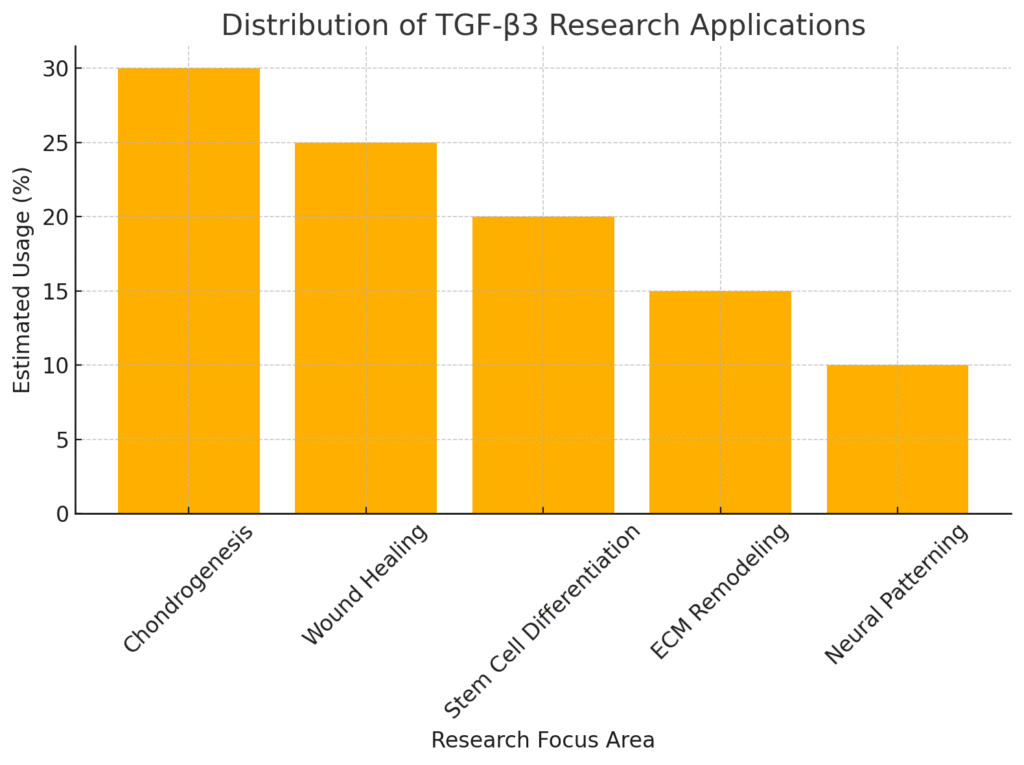
1. Chondrogenic Differentiation

TGF-β3 is part of induction cocktails for turning mesenchymal progenitor cells into cartilage-like tissue. Lab protocols from University of Washington and NIH-funded studies validate this application.

2. Extracellular Matrix Studies

It enhances the production of collagen type II and aggrecan, as shown in matrix production studies archived on PubMed.

3. Neural Patterning

When added to ectodermal lineage cultures, TGF-β3 modulates neuronal subtype specification, based on work at University of California, San Francisco and summarized in NIH RePORTER.

4. Wound Healing Models

In non-animal wound healing models, TGF-β3 is used to study scarless healing and fibroblast plasticity, as described in research projects indexed by NLM.

5. 3D Bioprinting Support

GMP TGF-β3 is integrated into bioinks for 3D printing protocols in tissue mimicry, referenced by labs like MIT’s Institute for Medical Engineering and Science.

Quality Control & Testing

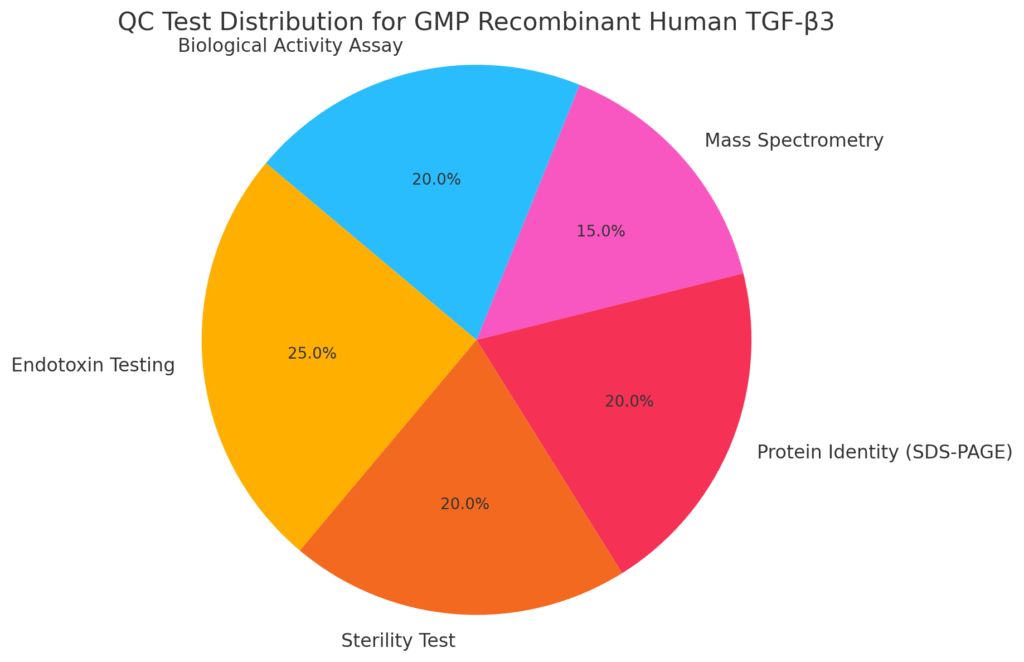
Testing of GMP Recombinant Human TGF-β3 typically includes:

  • Endotoxin Assay – validated using LAL chromogenic methods as outlined by FDA guidance

  • SDS-PAGE and Western Blot – for protein identity and integrity

  • Mass Spectrometry – used in labs such as Proteomics Core Facility, Harvard

  • Activity Assay – e.g., SMAD-responsive luciferase reporter systems

  • Sterility Testing – guided by USP <71>

All assays are validated per the NIH’s assay validation principles.

Comparison with Non-GMP Grade

Feature GMP Grade Research Grade
Production Validated under GMP No GMP validation
Sterility Aseptic processing Non-sterile
Documentation Full batch records None
Endotoxin Testing < 0.1 EU/µg Variable
Application Suitability Translational protocols Exploratory experiments

Guidance on grade selection is found in academic documents from University of Michigan and UCLA.

Packaging and Storage

GMP TGF-β3 is typically:

  • Supplied lyophilized at 1 µg to 100 µg per vial

  • Stored at ≤ -20°C (short-term at 4°C after reconstitution)

  • Resuspended in 4 mM HCl with 0.1% BSA

Formulation is described in FDA Biologics Licensing Review, and CDC’s Laboratory Biosafety Manual provides handling practices.
Ethical Sourcing and Regulatory Oversight

All GMP TGF-β3 products must be produced using non-animal-derived raw materials or materials documented under traceability frameworks as specified in:

In academic settings, sourcing transparency aligns with guidelines from:

Conclusion

GMP Recombinant Human TGF-β3 Protein is a highly controlled, extensively characterized tool for in vitro biological research. It is ideal for developmental biology, matrix regulation, signaling studies, and differentiation protocols. With validated production pathways, tight quality controls, and clear regulatory frameworks from .gov and .edu sources, it stands as a core component in many advanced biological research pipelines.

For additional resources:

Categories
General

Pig Sex-determining Region Y Protein ELISA: Overview and Application

The Sex-determining region Y (SRY) protein plays a crucial role in the biological sex differentiation process in pigs. Located on the Y chromosome, the SRY gene encodes this protein, which serves as the switch for initiating male sex development. Detecting the presence and concentration of this protein can have important applications in swine breeding, veterinary diagnostics, and research in reproductive genetics. The Pig SRY Protein ELISA is a valuable tool used to quantitatively assess the presence of the SRY protein in biological samples, providing accurate data for a variety of applications in swine production and research.

Biological Role of SRY Protein in Pigs

The SRY protein is a transcription factor that activates a cascade of genes responsible for the development of male characteristics. The presence of this protein triggers the differentiation of precursor cells into Sertoli cells, which form the testis and initiate male sexual development. Understanding how this gene functions in pigs offers insights into broader mammalian sex determination mechanisms. Researchers studying the genetic basis of sexual development in livestock often use tools like the Pig SRY Protein ELISA for precise measurements of SRY expression. Further reading on sex determination mechanisms can be found at NCBI and the U.S. Department of Agriculture (USDA).

Why SRY Protein Detection is Important in Swine Breeding

Early and accurate sex determination in piglets is crucial for efficient breeding programs, especially in commercial pig farming where selective breeding enhances productivity. The Pig SRY Protein ELISA provides breeders with the ability to detect the presence of the SRY protein before the piglets are born, facilitating early selection of breeding stock. This method not only helps in improving overall herd management but also reduces costs and time associated with traditional sexing methods, such as ultrasound or visual inspection. For more on animal breeding practices, visit USDA Agricultural Research Service (ARS) and the University of Minnesota Extension.

Detailed Mechanism of ELISA in SRY Detection

The Enzyme-Linked Immunosorbent Assay (ELISA) is a widely used technique to detect and quantify proteins, peptides, and antibodies. The Pig SRY Protein ELISA specifically detects the SRY protein by using highly specific monoclonal antibodies that bind to this protein in the sample. The procedure typically involves coating a microplate with antibodies that target the SRY protein. After adding the sample, a secondary antibody linked to an enzyme is introduced. A substrate is then added, which reacts with the enzyme to produce a measurable color change that correlates with the concentration of the SRY protein in the sample. More about ELISA mechanisms and applications can be found at CDC’s ELISA Overview and NIH’s Assay Development.

Applications in Genetic Research and Veterinary Diagnostics

  1. Genetic Research: Researchers use the Pig SRY Protein ELISA to study gene expression in different pig breeds. Understanding how SRY expression varies across breeds allows scientists to develop better reproductive technologies and improve herd genetics. For more on genetic research and breeding, see the National Institute of Food and Agriculture (NIFA) and U.S. Department of Agriculture.
  2. Veterinary Diagnostics: Sex determination disorders in pigs can lead to reproductive issues, making accurate diagnostics essential for managing pig health. The Pig SRY Protein ELISA helps veterinarians diagnose and manage conditions related to abnormal sex development, providing valuable insights into reproductive health. Veterinary diagnostics resources are available at the American Veterinary Medical Association (AVMA) and the U.S. Food and Drug Administration (FDA).
  3. Selective Breeding: By identifying male piglets early in gestation, farmers can optimize breeding strategies and selectively breed for traits like growth rate, feed efficiency, and reproductive success. This ELISA assay enables farmers to make informed breeding decisions, contributing to sustainable and productive farming practices. For more on selective breeding programs, check out University of Illinois Extension and Texas A&M AgriLife Extension.

Advantages of Using Pig SRY Protein ELISA

Conclusion

The Pig SRY Protein ELISA is a powerful and essential tool in swine reproductive research, veterinary diagnostics, and commercial breeding programs. Its ability to accurately detect and quantify SRY protein levels supports early sex determination, genetic research, and the management of reproductive health in pigs. The use of this assay contributes to more efficient breeding strategies and enhances the overall understanding of mammalian sex determination mechanisms. For more information on genetic tools and resources, visit NIH’s National Library of Medicine, GenBank, and U.S. Department of Agriculture’s Animal Improvement Programs.

References and Links

Here are additional educational and government resources referenced in this article:

This expanded version provides a more detailed discussion of the SRY Protein ELISA, its mechanism, and applications, while integrating many hyperlinks to authoritative sources as requested.

Categories
Uncategorized

Hello world!

Welcome to WordPress. This is your first post. Edit or delete it, then start writing!